Northern Camping: A Guide to Yukon and the Territories
Nothing quite prepares you for camping somewhere the sun barely sets. I checked my watch at what felt like a reasonable bedtime, maybe 11 p.m., and the sky outside the tent still looked like late afternoon. That’s the midnight sun doing exactly what it’s supposed to do in the Yukon’s summer months, and it throws off every internal clock you’ve built up camping anywhere further south.
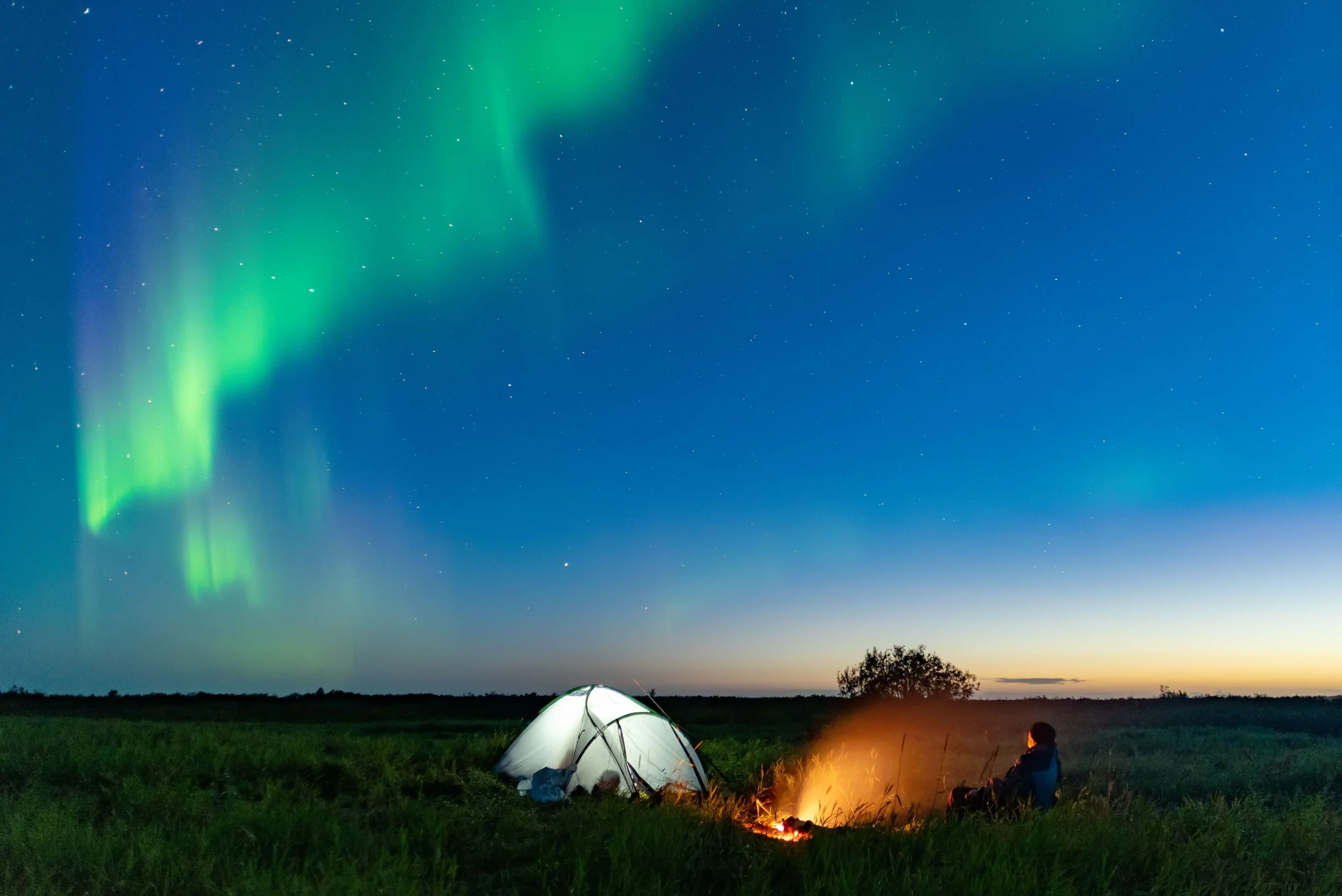
The flip side showed up a few months later, camping under a genuinely dark sky with the northern lights moving overhead in a way that photos never quite capture. Green light rippling slowly, then picking up speed, then fading, all in near-total silence. Between the two extremes, summer’s endless daylight and the aurora-lit nights of the shoulder seasons, camping in Yukon and the territories delivers experiences that most of Canada simply can’t match.
Why Northern Camping Requires a Different Mindset
Camping in the Yukon, Northwest Territories, or Nunavut isn’t a smaller-scale version of camping in the provinces further south. Distances stretch further between services, cell coverage disappears for long stretches even along major routes, and the camping season itself compresses into a much shorter window than most of the country gets. Understanding these differences before you go matters more here than almost anywhere else in Canada.
The Yukon alone covers over 480,000 square kilometers with a population under 45,000, and most of that land sits far from any town. Planning a trip means accepting a slower pace and more self-sufficiency than a typical car camping weekend requires.
Northern Camping Destinations Worth Knowing
| Destination | Territory | Best For | Notes |
|---|---|---|---|
| Kluane National Park | Yukon | Mountain scenery | Home to Canada’s highest peak, Mount Logan |
| Tombstone Territorial Park | Yukon | Dramatic alpine terrain | Backcountry reservations required, permit system |
| Dempster Highway campgrounds | Yukon/NWT | Road trip camping | Remote road access, limited services |
| Yellowknife area | Northwest Territories | Aurora viewing | One of the best accessible spots for northern lights |
You can check current availability and permit requirements directly through the official Yukon government camping page. Most road-accessible Yukon campgrounds operate on a first-come, first-served basis with a nightly permit fee, while backcountry destinations like Tombstone require advance reservations.
💡 Tip: Tombstone Territorial Park’s backcountry reservations open in early January and go quickly for peak summer dates. If you’re set on hiking the Grizzly Lake or Divide Lake area, mark the reservation opening date well in advance rather than checking casually a month before your planned trip.
The Midnight Sun Changes How You Camp
Summer in the Yukon means daylight stretching close to 20 hours in June, and in areas further north, the sun doesn’t fully set at all for stretches of the season. This sounds appealing until you’re actually trying to convince a tired body it’s time to sleep while it’s still bright outside. A proper sleep mask or a genuinely dark tent liner makes a bigger difference here than almost any other piece of gear you’ll pack.
The extended daylight does have a real upside beyond just novelty. It means more usable hours for hiking, fishing, or simply sitting outside than a standard summer trip further south allows. Evening hikes at what would be dusk anywhere else become completely normal, and some of the best wildlife viewing happens during these long, golden-lit evening hours.
Chasing the Northern Lights
Aurora viewing works best outside the midnight sun season, since you need real darkness to see it properly. Late August through April offers the best viewing window, with the northern lights appearing more reliably and vividly the further you get from any town’s light pollution. Yellowknife in the Northwest Territories has built a genuine tourism industry around aurora viewing, largely because of consistently clear, dark skies and relatively easy access compared to more remote territorial locations.
Camping specifically for aurora viewing means planning around shoulder-season cold rather than peak summer comfort. September and early October tend to offer a workable middle ground: dark enough skies for good aurora viewing, without the deep cold of a true winter camping trip.
⚠️ Heads up: Temperatures drop fast once the sun goes down in the shoulder seasons, even when daytime highs still feel mild. Pack a genuine cold-weather sleeping bag if you’re camping specifically to catch the aurora, since standing outside for an hour watching the sky gets uncomfortable fast without proper gear.
Wildlife Requires Real Preparation
Grizzly bears live throughout much of the Yukon and Northwest Territories backcountry, and proper food storage isn’t a suggestion here, it’s a requirement most parks enforce directly. Tombstone Territorial Park requires bear-resistant food canisters, available to rent at the park’s visitor centre, and similar precautions apply across most of the territory’s backcountry destinations.
Beyond bears, the sheer scale of wildlife here differs from most of southern Canada. Caribou herds migrate across huge stretches of territory, and encountering one mid-migration is a genuine possibility depending on timing and route. Wolves, moose, and Dall sheep round out a wildlife list that draws serious wildlife photographers north specifically for the opportunity.
Getting There and Planning Around Distance
Most northern camping trips start with a flight or a long drive into Whitehorse, Yukon’s capital, or a similar gateway community, and then a further drive to reach many of the territory’s best-known camping destinations. The Dempster Highway, connecting the Yukon to the Northwest Territories, offers camping along the route itself but comes with long stretches between fuel stops and services, so planning fuel and supplies carefully matters more here than on almost any other road trip in the country.
Cell service disappears for long stretches once you’re off the main highways, and satellite communication devices are worth considering standard gear rather than an optional extra, particularly for anyone planning backcountry routes in Tombstone or similar remote parks.
What to Pack Beyond Standard Gear
Northern camping calls for a few additions beyond a typical summer packing list. A proper cold-weather sleeping bag, even for a summer trip, since nighttime temperatures can drop well below what a standard three-season bag handles, particularly at higher elevations or during shoulder-season aurora trips. A sleep mask or blackout tent liner for the midnight sun season, and genuinely warm layers for aurora viewing, since standing still in the cold to watch the sky adds up fast.
A bear-resistant food canister, either brought from home or rented locally at parks like Tombstone, and a satellite communicator for anywhere beyond cell coverage, which describes most of the territory outside the main highway corridors.
Final Thoughts
Camping in Yukon and the northern territories asks more of you than a typical Canadian camping trip, longer distances, shorter seasons, and real wildlife precautions, but it delivers experiences that genuinely don’t exist anywhere else in the country. Time a summer trip around the midnight sun for endless daylight, or plan a shoulder-season trip specifically to catch the northern lights, and pack for cold nights regardless of which season you choose. Few camping trips in Canada match what the north delivers once you’re actually out there.
If you’re planning trips elsewhere in Canada, check out our guides to camping in Manitoba’s provincial parks, pet-friendly campgrounds in Saskatchewan, and camping in New Brunswick.