Camping Food: Easy Make-Ahead Meals for the Campsite
I learned this lesson the hard way, standing at a picnic table trying to chop onions on a surface that clearly hadn’t been cleaned since the last camper left. Campsite prep areas are often small, uneven, and not exactly spotless. That experience changed how I approach camping food make-ahead meals completely, and it’s made every trip since noticeably easier.
Why I Prep Everything at Home Now
Most campsites just don’t give you a proper kitchen setup. Counter space is limited, water access is sometimes a walk away, and the surfaces available for chopping vegetables or trimming meat aren’t always clean. I stopped fighting that reality and started working around it instead.
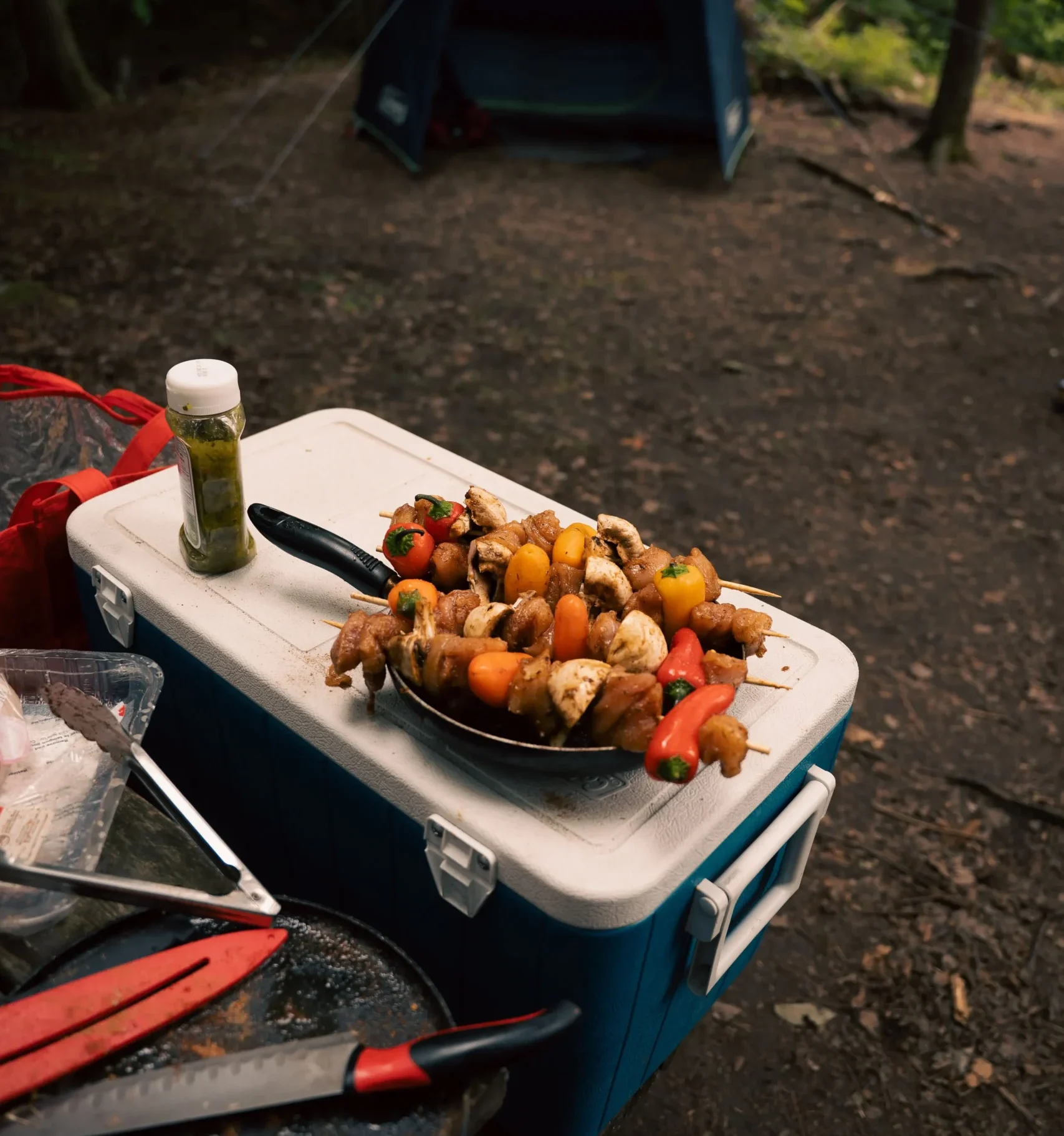
Now, before any trip, I chop all my vegetables at home. Onions, peppers, whatever the meal calls for, all diced and bagged before we even load the car. Meat gets trimmed and marinated in advance too, sealed in containers or bags ready to go straight onto the grill or into the pot. When we arrive at the site, cooking becomes fast. No prep work standing between us and dinner, just assembly and heat.
💡 Tip: Chop vegetables into the exact size you’ll need for the recipe before you leave home. It saves a knife, a cutting board, and a cramped prep surface at the site.
Why This Matters Beyond Convenience
It isn’t just about speed. Prepping at home means using your own clean kitchen, your own cutting board, your own sink. That’s a meaningfully cleaner process than working on a weathered picnic table with limited water for rinsing hands and tools between steps.
Soups That Travel Well
Soup turned out to be one of the easiest camping food make-ahead meals I make regularly. Cook it fully at home, cool it, and freeze it solid before the trip. A frozen block of soup does double duty in the cooler, keeping other food cold while it slowly thaws, and by dinner it’s usually ready to reheat over the fire or a camp stove.
Reheating Frozen Soup Safely
Reheat soup until it’s steaming hot all the way through, not just warmed at the edges. This matters more at a campsite than at home, since inconsistent heat from a camp stove or open fire can leave cold spots if you’re not stirring and checking regularly.
Marinated Meat for Fast, Simple Dinners
Marinating meat at home solves two problems at once. It cuts down on prep time at the site, and it means the raw meat spends less time being handled in a less controlled environment. I bag it flat in the marinade so it lies well in the cooler, and by the time we’re ready to cook, it just needs to come out and hit the grill.
⚠️ Heads up: Raw meat needs to stay separated from other food in the cooler the entire trip, not just during transport. Pack it in sealed, leak-proof bags at the bottom of the cooler, below anything ready to eat.
Getting the Cooking Temperature Right
Cooking meat properly matters just as much at a campsite as it does at home. Whole cuts of beef, pork, and lamb need to reach an internal temperature of at least 74°C, and poultry needs the same. A simple food thermometer takes the guesswork out of this, especially over an open flame where colour alone doesn’t reliably tell you whether meat is fully cooked.
The Food Safety Rules That Actually Matter
Prepping ahead only helps if the food stays safe on the way to being cooked. According to Health Canada’s food safety guidelines, perishable food needs to stay at 4°C or below, and the danger zone between 4°C and 60°C is where bacteria multiply quickly.
The Two-Hour Rule
Any perishable food sitting between those temperatures for more than two hours becomes a real risk, and that window shrinks to one hour if it’s especially hot outside. This applies just as much to prepped vegetables and marinating meat as it does to any other food, so packing your cooler properly matters as much as the prep work itself.
Packing the Cooler With Prepped Food in Mind
I keep raw meat at the bottom, sealed separately, with prepped vegetables and anything ready to eat packed above it. Freezing the meat or a soup ahead of time doubles as extra ice, which helps everything else in the cooler stay colder for longer.
A Few Make-Ahead Meals Worth Trying
Here’s a simple lineup that’s worked well across different types of trips, from car camping to RV cooking with more counter space.
| Meal | Prep at Home | Finish at Camp |
|---|---|---|
| Frozen soup or chili | Cook fully, cool, freeze solid | Reheat until steaming hot |
| Marinated chicken or steak | Trim and marinate, bag flat | Grill or pan-fry to safe temperature |
| Pre-chopped stir-fry vegetables | Wash, chop, bag by meal | Toss into a hot pan with protein |
| Pre-made burger patties | Form and season, stack with parchment | Grill straight from the cooler |
| Overnight oats or pre-mixed pancake batter | Mix dry or wet ingredients ahead | Add liquid or cook directly |
Why This Approach Works for Every Kind of Camping
This system works whether you’re tent camping, car camping, or cooking in an RV. Tent and car camping benefit most, since counter space and clean water are the most limited in those setups. RV cooking is easier by comparison, but prepping ahead still saves time, especially on a travel day when you’d rather set up and relax than start chopping vegetables after a long drive.
Final Thoughts
Standing at that dirty picnic table trying to prep a full meal from scratch taught me something simple. The less work I need to do once I’ve arrived, the more the trip actually feels like a break. Prepping vegetables and marinating meat at home turned campsite cooking from a chore into something closer to assembly, quick, clean, and a lot less stressful.
If you’re planning a trip somewhere remote, our guide to Prince Edward Island camping and our northern camping guide to Yukon and the territories are both worth a read, since food planning matters even more when the nearest grocery store is far away. And if you’re just getting into backcountry trips, our Alberta backcountry guide for first-timers covers what to expect beyond the food side of things too.
Whatever you’re cooking this season, a little prep work at home goes a long way toward making dinner at the campsite the easy part of the day instead of the hardest one.