Prince Edward Island Camping: Small Province, Big Views
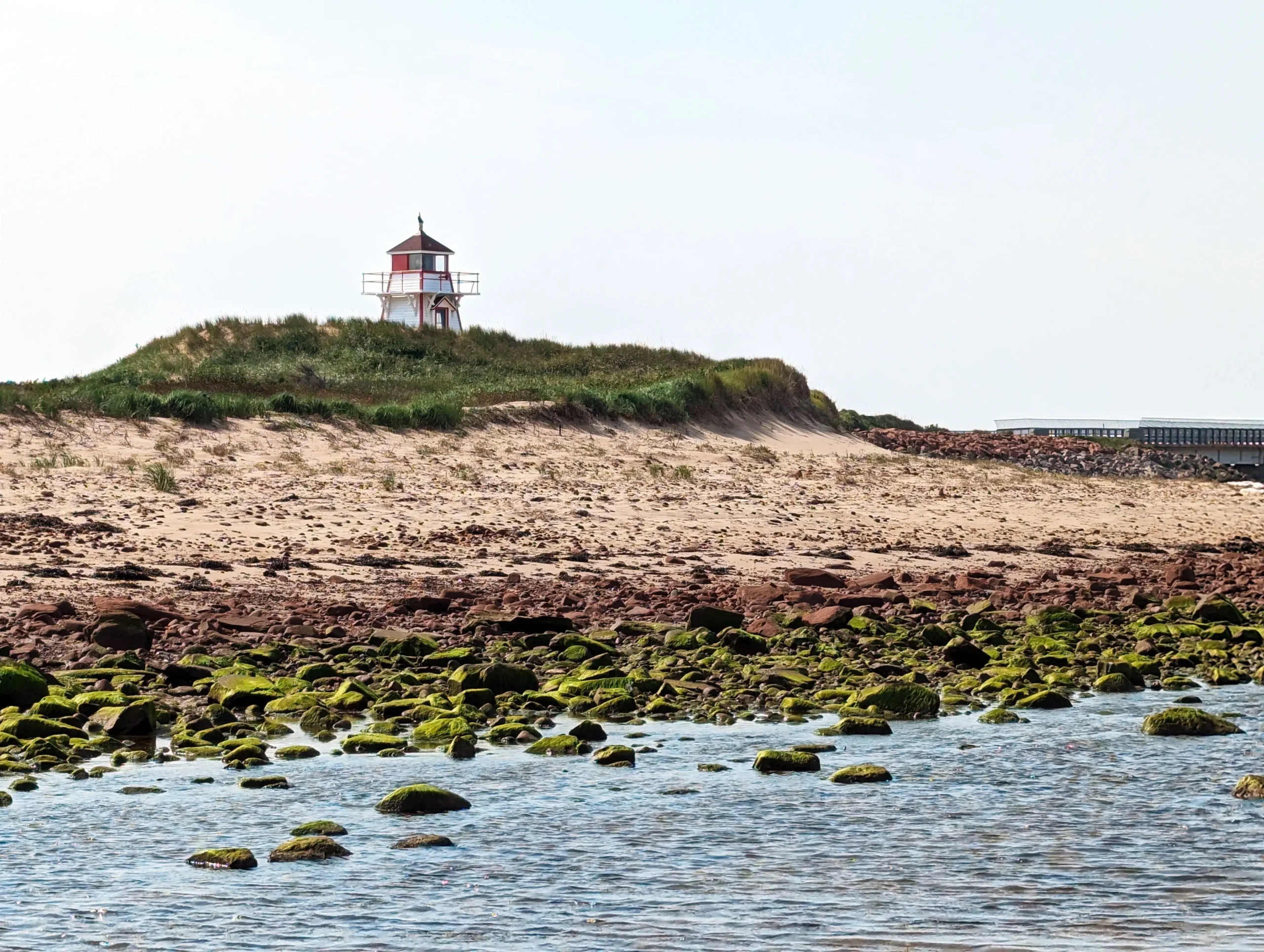
I wasn’t ready for how red the sand actually is. Photos make it look almost exaggerated, like someone bumped the saturation, but standing on it at Cavendish, the color is real, and it squeaks slightly underfoot in a way I hadn’t expected from any beach I’d camped at before. That small, strange detail stuck with me more than almost anything else from the trip.
PEI is Canada’s smallest province by a wide margin, and that turns out to be one of its biggest advantages for camping. Nothing sits far from anything else. A red-cliff beach in the morning, a lighthouse by lunch, fresh seafood by dinner, all without the multi-hour drives that eat up so much of a trip in bigger provinces.
What Makes PEI Different From the Rest of Atlantic Canada
Compared to Nova Scotia’s rugged coastline or New Brunswick’s mix of forest and fjord, PEI runs gentler and more compact. Rolling farmland, red sandstone cliffs, and a coastline that never sits more than a short drive away define most of the island. The whole province covers roughly 5,700 square kilometers, small enough that you could theoretically drive from one end to the other in under three hours.
That compactness shapes the whole camping experience. You’re never committing to a single region the way you might in a bigger province. A morning at the beach, an afternoon exploring a small fishing village, and an evening back at camp all fit comfortably into one day without much driving in between.
PEI Campgrounds Worth Visiting
| Campground | Region | Best For | Notes |
|---|---|---|---|
| Cavendish Campground | PEI National Park | Beach access, families | Fully serviced, right on the water |
| Stanhope Campground | PEI National Park | Quiet, forested sites | More tree cover, less crowded than Cavendish |
| Cedar Dunes Provincial Park | Southwest | Warm swimming | Some of the warmest water north of the Carolinas |
| Red Point Provincial Park | Eastern PEI | Coastal hiking | Red sandstone shoreline, quieter region |
You can check current availability and book directly through the Parks Canada camping page for PEI National Park. PEI’s national park campgrounds run from June to September, with reservations for the summer season typically opening in January.
💡 Tip: Cavendish books up fastest, largely because of its beach access and proximity to Green Gables Heritage Site. If you’d rather have a quieter, more forested experience with a short walk to the beach instead of direct access, Stanhope is worth booking instead.
What Nobody Tells You About the Campsites
Not every site at PEI’s campgrounds is as manicured as the photos suggest. My site had enough leftover tree stumps scattered through it that finding flat, clear ground for a full-size tent took longer than I expected, and the ground itself turned out harder and rockier than the soft coastal image the island projects. Standard tent stakes struggled in a few spots, and a fellow camper actually lent us a couple of extra pegs when ours started bending.
It’s worth packing a slightly more rugged stake set than you’d bring to a typical forest campsite, along with a mallet if you don’t already carry one. It’s a small thing, but it saves a frustrating twenty minutes of trying to force standard stakes into ground that doesn’t want to cooperate.
⚠️ Heads up: Firewood restrictions apply strictly in PEI National Park to protect against invasive species like the brown spruce longhorn beetle. You can’t bring your own firewood, even from another PEI campground. Buy it on-site at either campground once you arrive.
The Red Sand and the Rest of the Coastline
Basin Head, on the island’s eastern side, takes the red sand a step further. The sand there is fine enough, with a high enough silica content, that it genuinely squeaks with each step, something the island is locally known for. Cavendish and the beaches within PEI National Park carry the same reddish tone, set against sandstone cliffs that catch dramatic light at sunset.
The water itself surprised me too. Between the shallow depth near shore and the Gulf’s warming effect, swimming felt noticeably more comfortable than I expected from an Atlantic Canada beach, closer to what I’d associate with a lake than an ocean. Cedar Dunes, on the island’s southwest side facing the Northumberland Strait, reportedly runs even warmer, among the warmest ocean water in the region.
Greenwich and the Floating Boardwalk
Beyond the main Cavendish and Stanhope areas, the Greenwich section of PEI National Park stands out as one of the more unusual hikes I’ve done anywhere in Canada. A floating boardwalk winds through wetland and over parabolic sand dunes before reaching a beach that feels considerably more remote than the crowds at Cavendish. The walk itself takes under an hour each way, flat and easy enough for most fitness levels, which makes it a strong addition to a trip even if hiking isn’t usually the main draw for you.
Small Island, Big Crowds in Summer
The tradeoff for PEI’s compact size and easy accessibility shows up in July and August, when the island’s popularity, driven largely by the Anne of Green Gables connection and the beaches, brings noticeably heavier crowds than a similarly sized area in a bigger province would see. Cavendish in particular gets busy, both at the campground and on the surrounding beaches and boardwalk.
If crowds aren’t your preference, early June or September offer a real alternative. The water stays swimmable later into September than you might expect, and the crowds thin out dramatically once the school year starts. Stanhope, being the quieter of the two national park campgrounds, is also worth prioritizing over Cavendish if a calmer trip matters more to you than direct beach access.
Food Worth Building a Day Around
PEI’s food reputation isn’t overstated. Fresh seafood, particularly mussels and oysters, shows up on menus across the island at a quality and price that’s hard to match elsewhere in the country. Small towns like North Rustico, close to both national park campgrounds, offer easy access to fresh catch without much of a detour from a normal camping day.
The island’s ice cream culture also deserves a mention, mostly because multiple people mentioned it to me before I’d even arrived. It’s a small, specific kind of local pride that shows up everywhere from gas stations to dedicated dairy bars, and it’s worth factoring into at least one afternoon of the trip.
Getting There
PEI connects to the mainland via the Confederation Bridge from New Brunswick, a straightforward drive-on option, or by ferry from Nova Scotia during the warmer months. Both national park campgrounds sit within a 25 to 30 minute drive of Charlottetown, the provincial capital, which makes the island easy to combine with a broader Atlantic Canada road trip rather than treating it as a standalone destination.
Final Thoughts
Prince Edward Island rewards a camping trip precisely because of how little ground you need to cover to see most of what makes it worth visiting. Book Cavendish for beach access or Stanhope for quiet, pack sturdier tent stakes than you think you’ll need, and leave room in the itinerary for Greenwich’s boardwalk and at least one proper seafood meal. The red sand alone is worth the trip, squeaky footsteps and all.
If you’re planning trips elsewhere in Canada, check out our guides to family-friendly campgrounds in British Columbia, camping in Nova Scotia’s coastal parks, and winter camping in the Canadian Rockies.