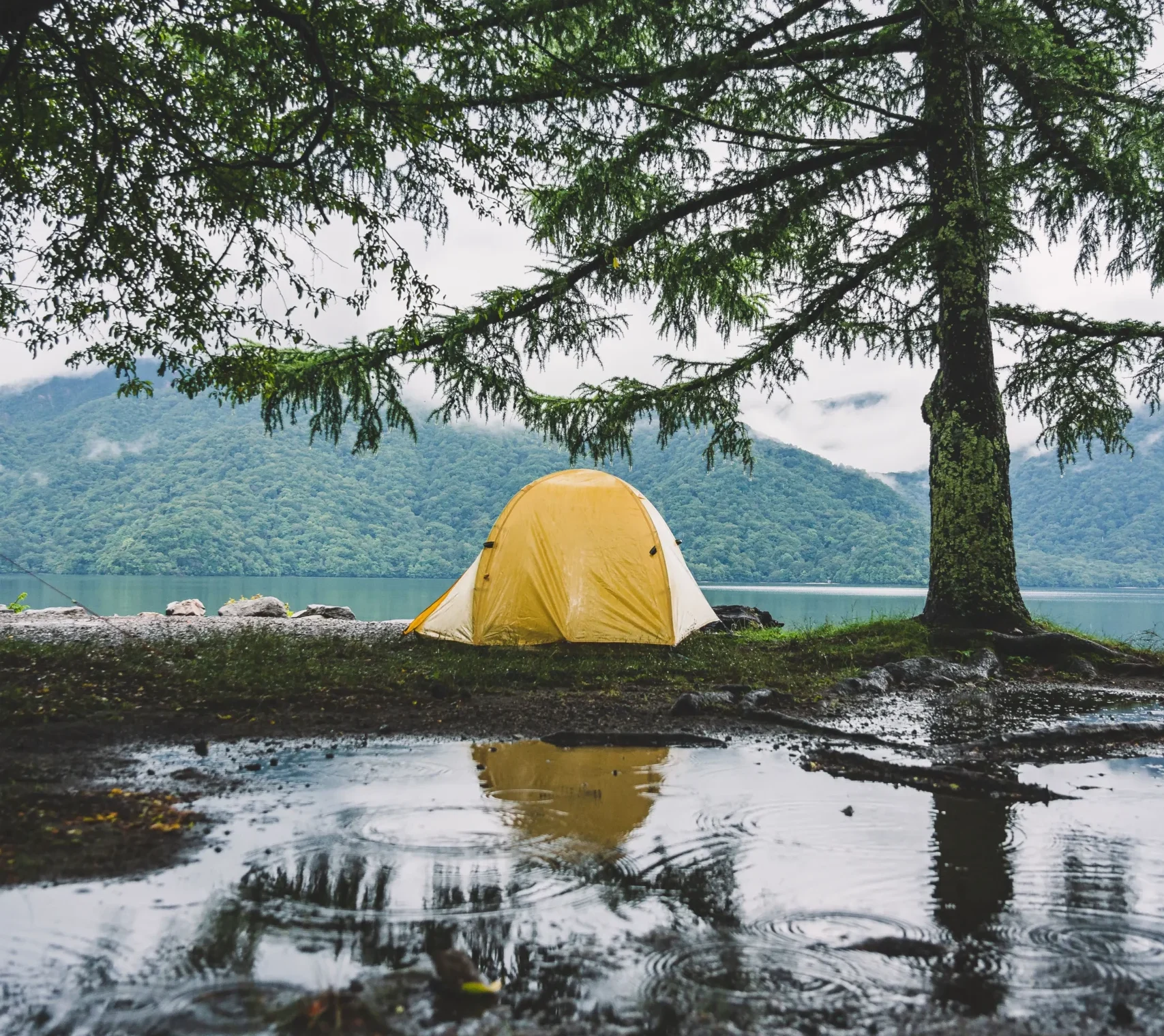
Camping in the Rain: What I Wish I Knew Sooner
A sudden downpour caught me mid-setup on one trip, and I ended up pitching the whole tent soaked through, poles slipping in my wet hands, rain running down my back the entire time. That afternoon taught me more about camping in the rain than every dry, sunny trip combined. Here’s what I wish I’d known before that day.
The Mistake That Started It All
I hadn’t packed proper rain gear. Not seriously, anyway, just a thin jacket that soaked through within minutes. By the time the tent was up, I was already cold and miserable, and the trip hadn’t even really started yet. That regret stuck with me longer than the actual discomfort did.
⚠️ Heads up: Pack real rain gear, not just a light jacket, even if the forecast looks clear. Sudden downpours in Canada’s parks are common enough that “probably fine” isn’t a real plan.
What I Pack Now
A proper waterproof rain jacket and pants live in my car year-round for camping season. Waterproof boots or at minimum a dry pair of socks to change into matter just as much. Staying dry isn’t about comfort alone. Wet clothing in cool weather speeds up heat loss, and that’s a real safety concern, not just an inconvenience.
Water Under the Tent Is the Bigger Problem
Getting soaked while setting up was miserable, but the lesson that mattered more came after. Water pooling underneath the tent floor is what actually ruins a night’s sleep, not the rain falling from above.
Why Trenching Isn’t the Answer Anymore
My instinct was to dig a trench around the tent to redirect runoff, and that used to be standard advice. It isn’t anymore. Leave No Trace guidelines are explicit on this point: don’t build structures, furniture, or dig trenches at a campsite. Digging disrupts root systems, causes erosion, and leaves a visible scar that outlasts your trip by a long time. Plenty of parks actively discourage or prohibit it now.
What Actually Works Instead
A better approach protects your tent without digging into the ground at all.
- Choose your site carefully first. A slightly elevated, level spot with natural drainage beats any amount of after-the-fact fixing. Avoid low points where water naturally collects.
- Use a footprint or groundsheet sized to match your tent exactly. If the groundsheet extends past the tent’s edge, rain running off the fly collects on the exposed edge and channels straight underneath the floor instead of away from it.
- Build a rain dam instead of a trench. Line up sticks or stones into a low ridge just outside where your tent will sit, then pitch with the tent’s edge resting against that ridge. It redirects runoff around the tent without disturbing the ground the way a trench does.
- Pick a tent with a proper bathtub floor. Most modern tents already have this built in, a floor that curves up several inches at the edges before meeting the walls, which keeps ground moisture and light runoff from ever reaching the sleeping area.
💡 Tip: Scatter any sticks or stones used for a rain dam before you leave. It takes thirty seconds and keeps the site looking untouched for the next camper.
Setting Up Before the Rain, Not During It
The trip that soaked me taught me to take weather forecasts far more seriously than I used to. Now I check conditions closely enough to know roughly when rain is expected, and I aim to have the tent up, staked, and the rainfly attached before the first drop falls.
A Faster Setup Routine
Practicing the setup at home, even once, pays off enormously in bad weather. Knowing exactly which pole goes where without thinking about it means the difference between a two-minute pitch and a ten-minute one, and every extra minute in a downpour makes a real difference to how wet everything gets.
Keeping Gear Dry During Setup
I keep everything that doesn’t need to come out immediately packed inside a dry bag or under a tarp until the tent itself is fully set up. Sleeping bags and spare clothes are the last things I want soaked before the trip has even properly started.
Managing a Rainy Day Once You’re Set Up
Getting the tent up dry solves one problem, but a full day of rain brings its own challenges, especially with kids along.
Keep a Dedicated Dry Space
A tarp strung up over the picnic table or cooking area gives everyone somewhere to sit, cook, and eat without huddling inside the tent all day. It also keeps a wet, muddy mess from tracking into the sleeping area.
Plan Activities That Don’t Depend on Sun
Card games, simple crafts, or a portable activity that doesn’t need dry ground keeps kids occupied without everyone getting soggier by the hour. Building this into the plan ahead of time, rather than improvising once the rain starts, makes a rainy afternoon far less stressful.
Drying Gear Overnight
Wet boots and jackets left outside overnight rarely dry much in humid conditions. Bringing them into a vestibule or covered space, even if it means a slightly more cramped tent, keeps you from starting the next day in gear that’s still soaked through.
A Quick Rainy Camping Checklist
| Item or Task | Why It Matters |
|---|---|
| Real rain jacket and pants | Prevents heat loss and keeps setup manageable |
| Footprint sized to tent | Stops runoff from channeling under the floor |
| Sticks or stones for a rain dam | Redirects water without digging or disturbing soil |
| Tarp over cooking/sitting area | Gives a dry space for the whole day, not just sleeping |
| Dry bag for spare clothes | Keeps a backup dry even if the first set gets soaked |
| Backup indoor activities | Keeps kids occupied without depending on clear weather |
Final Thoughts
That soaked, miserable tent pitch changed how seriously I take rain gear and site selection now. The rain itself wasn’t really the problem. Being unprepared for it was. A little planning, real rain gear, a properly chosen site, and a dry space to retreat to, turns a rainy trip from a disaster into just another kind of camping day.
If you’re planning a family trip and want a milder introduction to variable weather, our guide to family-friendly campgrounds in British Columbia and our easiest sites for camping with kids in Ontario are both good starting points. And if cold weather on top of wet conditions is something you’re planning for, our winter camping guide to the Canadian Rockies covers what changes once the temperature drops too.
Whatever the forecast says, a little preparation goes a long way toward keeping a rainy trip enjoyable instead of miserable.